Appendix: Aphrodite

Image

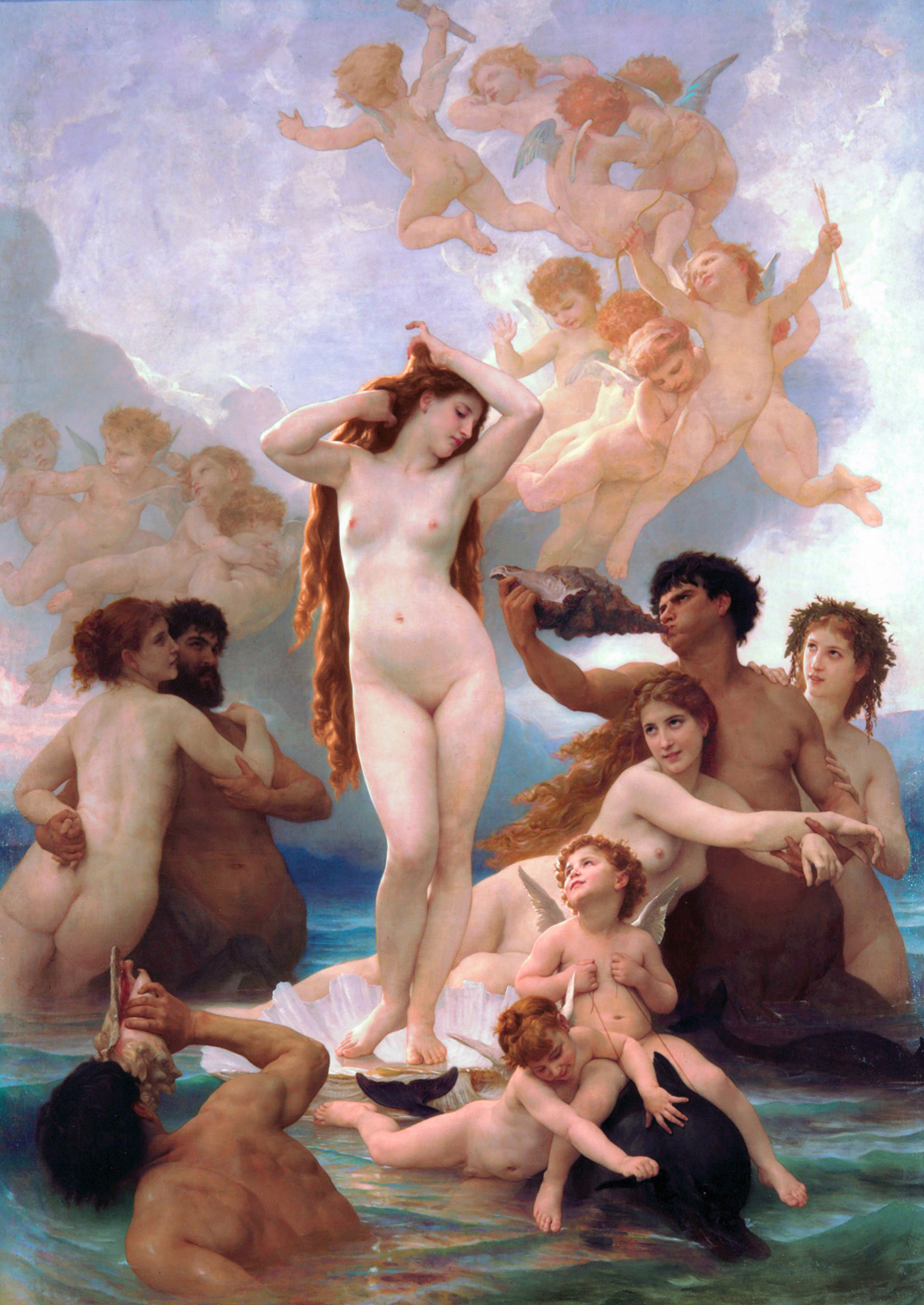
In Greek mythology, Aphrodite is the goddess of love, beauty and sexual passion. She was born when Uranus was castrated by his son Cronus, his severed genitals thrown into the ocean began to churn and foam about them. From the aphros (“sea foam”) arose Aphrodite, and the sea carried her to the Isle of Cyprus.

After her birth, Zeus feared that the gods would fight over Aphrodite’s hand in marriage so he married her off to Hephaestus, god of fire. She loved gaiety and glamour and was not at all pleased at being the wife of the smithy Hephaestus. He forged an embroidered girdle for her called Cestus, which had the power of inspiring love. Aphrodite loved and was loved by many gods and mortals. Among her mortal lovers, the most famous was Adonis. Some of her sons are Eros, Anteros, Humenaios and Aeneas. Her favorite birds were swans and doves, and the rose and myrtle were sacred to her.

Ancient mythology furnishes numerous instances in which Aphrodite punished those who neglected her worship or despised her power, as well as others in which she favoured and protected those who did homage to her and recognized her sway. Love and beauty are ideas essentially connected, and Aphrodite was therefore also the goddess of beauty and gracefulness. In these points she surpassed all other goddesses, and she received the prize of beauty from Paris; she had further the power of granting beauty and invincible charms to others.

Her festival is the Aphrodisiac which was celebrated in various centers of Greece and especially in Athens and Corinth. Her priestesses were not prostitutes but women who represented the goddess and sexual intercourse with them was considered just one of the methods of worship.

The most detailed information on Aphrodite may be found here: http://www.theoi.com/Olympios/Aphrodite.html 

Appendix: Groove

Image

From the Urban Dictionary:

The groove is so mysterious. We’re born with it and we lose it and the world seems to split apart before our eyes into stupid and cool. When we get it back, the world unifies around us, and both stupid and cool fall away.I am grateful to those who are keepers of the groove.

-Lynda Barry, from 100 Demons

When I decided to act on my own volition rather than society’s, I realized…baby, I got my groove back!

Appendix: Ouroboros

The Ouroboros has been a symbol of the eternal cycle, constantly beginning and ending, representing the perpetual cycle of renewal. Similar to the Phoenix, it represents life, death and rebirth. It’s an ancient symbol representing a serpent or a dragon eating it’s own tail. Text have described the Ouroboros to also be the mathematical representation of Infinity.

Images of the Ouroboros can be seen throughout history:

  • Ancient Egypt
  • Greece
  • Middle East
  • India
  • China
  • Japan
  • South America
  • Native American culture

Humanity is drawn to the elegance of eternal rebirth. There is something alluring about a continual cycle that is never-ending and eternal. Perhaps it represents a taste of Immortality; or more simply the possibility of Second Chances.

We are flawed and prone to making mistakes in life. The Ouroboros represents the knowledge that one cycle will end, and a new one begins with new possibilities. In a way, The Ouroboros goes beyond the cycle. There is a spiritual Hope in its symbolism.

Image

Appendix: The Butterfly

Image

Throughout the ages, the Butterfly has been described as an insect of beauty and grace as it flutters through the air in a delicate dance. Coming in various colors, disguising itself from predators, with indescribable patterns.

But the Butterfly is much more than that!

The Butterfly symbolizes metamorphosis and transformation. From its caterpillar form, it slowly weaves its chrysalis, biding its time until it has fully matured – finally, emerging in all its splendor as a Butterfly.

We all repeat this simple cycle in our lives. We crawl in stages that represent our infancy whether it be actual youth or as a beginning learner. After we have reached a certain point, we realize that we must transform ourselves to that next level. The transformation is slow, but eventual. We attain the pinnacle of our natural state. Emerging with our proverbial wings in full spread for the world to see.

This may occur multiple times throughout our lives for some; but for others – this transformation may only happen once. For very few, this never happens at all.

I would like to think that I’m in my chrysalis stage at the moment. I’m awaiting the end of this cycle. Watching through opaque walls that bind me. Restrained in a bundle, awaiting my freedom. Wanting to emerge, knowing that the beating of my wings in first flight has the potential to cause a tidal wave of change across the world.

Appendix: Grindr

Image

If you aren’t familiar with it, Grindr has been the “love it or hate it” hook-up mobile device app for the gay community over the past few years. Just fire up your iPhone and instantaneously find another gay man within 100 feet of you! Instant gratification! From the official Grindr website:

The world’s biggest mobile network of guys

ImageGrindr, which first launched in 2009, has exploded into the largest and most popular all-male location-based social network out there. With more than 4 million guys in 192 countries around the world — and approximately 10,000 more new users downloading the app every day — you’ll always find a new date, buddy, or friend on Grindr.

Grindr is quick, convenient, and discreet. And it’s as anonymous as you want it to be. Grindr is a simple app that uses your mobile device’s location-based services to show you the guys closest to you who are also on Grindr. How much of your info they see is entirely your call.

0 feet away: Our mission for you

Grindr’s different because it’s uncomplicated and meant to help you meet Imageguys while you’re on the go. It’s not your average dating site — you know, the ones that make you sit in front of a faraway computer filling out complex, detailed profiles and answering invasive psychological questions. We’d rather you were zero feet away.

Whether you’re traveling, new in town, or just hanging out at home, Grindr’s the fastest, easiest, and most fun way to connect with the biggest network of nearby guys. And it’s available on not just the iPhone but also the iPad, iPod touch, Android, and BlackBerry.

It’s always amusing for me to see who’s around and to see what guys are looking for. What I’ve seen and experienced with this app is that the instant gratification can be detrimental. A person can get addicted to the ease of finding that “one night stand”. It literally is an online shopping site for gay men: fire it up, go window shopping for whatever you’re in the mood for, click on the profile, say “Hi” and let the games begin!

In all fairness, not all of the interactions are successful. The fickleness of individuals may counter the desires of the desperately seeking individual. After all, attraction goes both ways.

If you know a gay man (single or partnered) and if they have an iPhone, there’s a good chance they will have Grindr installed on their phone. You never know just when they’ll crave that hook-up.

As I mentioned earlier, you either love it or hate it. I’ve made a few good friends using Grindr, but more often I’ve had failures meeting guys on Grindr. As of May, I’m on hiatus from the app. But who knows… I haven’t uninstalled it quite yet… I may just fire up over the next few weeks. I’m currently testing my patience and willpower to stay away from this app. Wish me luck!

Appendix: The Phoenix

Image

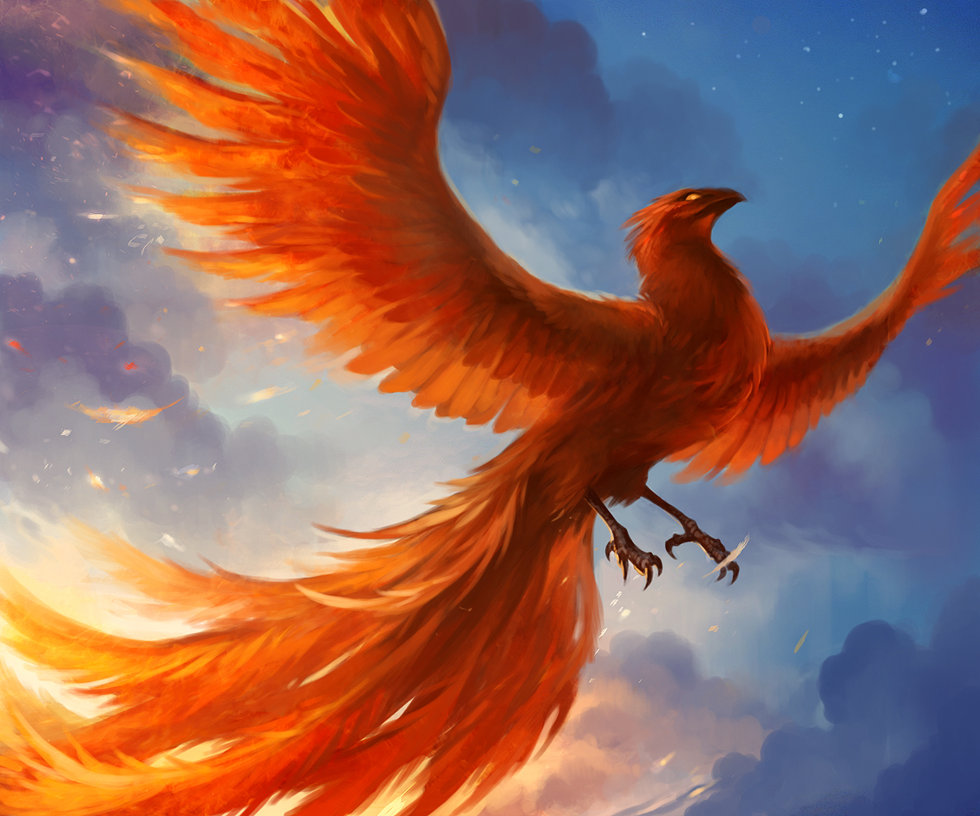
Ever since I was young, I was always fascinated by the mythological creature called the Phoenix. A brilliant, fiery bird that lived hundreds of years only to be consumed by its own flames at the end of its cycle, but its gift is its rebirth! Out of the ashes spawns a new Phoenix only to repeat its cycle all over again!

According to numerous texts, the Phoenix has been an enduring mythological symbol for millennia and across multiple cultures. According to the New World Encyclopedia:

“From religious and naturalistic symbolism in ancient Egypt, to secular symbol for armies, communities, and even societies, as well as an often-used literary symbol, this mythical bird’s representation of death and rebirth seems to resonate with humankind’s aspirations.”

In Ancient Egypt, the Phoenix was associated with immortality, and that symbolism had a widespread appeal in late antiquity. The Phoenix was beautifully colored, bathed in flames, with its vibrant gold and scarlet plumage. Ancient society regarded it as a magnificent gentle bird, often described as eagle-like, and does not kill anything.

In Feng Shui tradition, when the Phoenix was reborn, it quickly grew with grace, power and strength. The legendary bird of the sun represents the four Confucian virtues:

  • Honesty
  • Loyalty
  • Justice
  • Decorum

In Chinese culture, the Phoenix symbolized: the union and melding of yin and yang; prosperity and power; grace and high virtue; and The Empress.

The Phoenix cycle is counter to the Buddhist belief of reincarnation. While the Phoenix goes through its immortal dance of rebirth with elegance & grace intact; the Buddhist doctrine of reincarnation is dictated by Karma and eventually has a finite cycle.